


阿旺上师
Master Awang
上师介绍
阿旺嘉措金刚上师简介
Ven. Awang Jiacuo Vajra Guru: A Biography
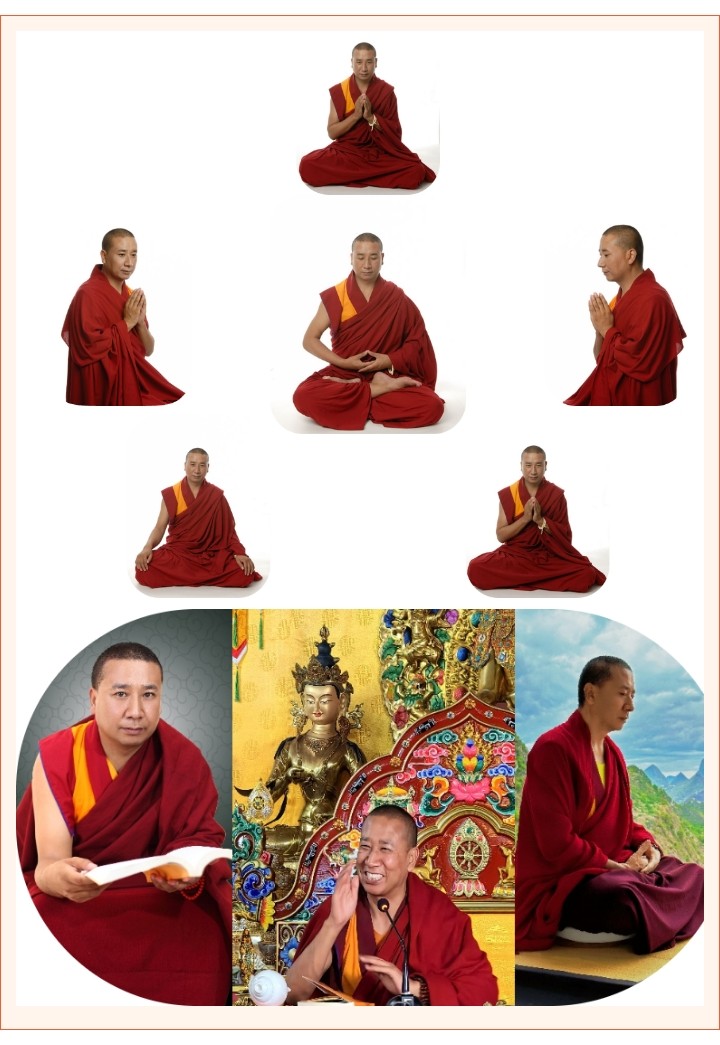
阿旺嘉措金刚上师(以下简称阿旺上师),青海省陀乐寺大法台堪布,俄仁巴格西(佛学显密博士),格鲁密法耳传持有者,当代著名佛学教育家和藏汉翻译家。
Ven. Awang Jiacuo Vajra Guru (hereinafter referred to as Guru Awang) is the Throne Holder and Khenpo (Abbot) of Tuole Monastery in Qinghai Province, an Rabjampa Geshe (Doctor of Sūtra and Tantra), a lineage holder of the Gelug Ear-Whispered Tantric teachings, and a renowned Buddhist educator and Tibetan-Chinese translator.
清净圆满的法脉传承
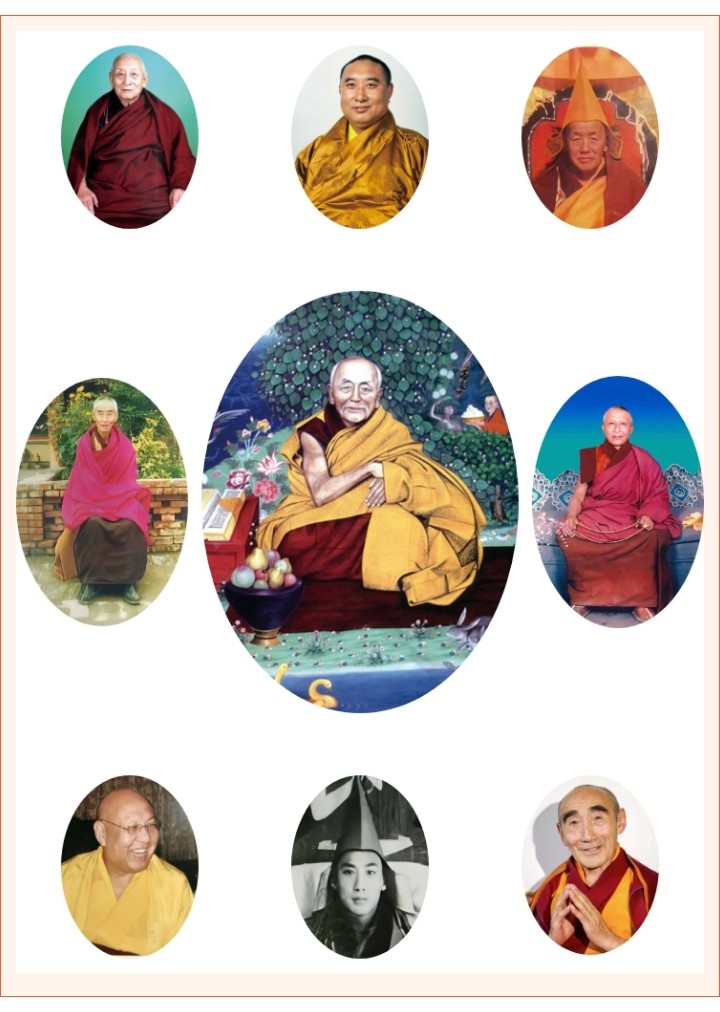
阿旺上师1969年正月十五诞生于青海省海南藏族自治州贵南县境内。六岁入佛门,十八岁在拉茂雍增大法王足下剃度出家,受沙弥戒,取法名“阿旺嘉措”,意为“语王法海”,二十一岁在益西嘉措大法王足下受比丘戒,除了依止这二位大法王,还拜了第十世班禅大师、塔尔寺大法台堪布格迦活佛、尕藏曲松金刚上师、洛桑多杰金刚上师、格西仁波切、南喀坚参上师等八位上师,承接了20世纪最伟大的佛学家拉科仁波切法脉,该法脉由前七位大德清净传承,并完整得到了八位上师的心法传承,得到灌顶两百余种、随许灌顶三百多项、引导二百八十余种、三千多个经论口传与八十多个耳传密诀。阿旺上师是释迦牟尼佛《般若经》第四十六代传人,传承清净圆满,法脉传承的纯洁性与正统性使其成为藏传佛教格鲁派当代重要传承者,其法脉传承具有特殊的历史地位。
Illustrious Lineage and Dharma Education
Born on the 15th day of the first lunar month in 1969 in Guinan County, Hainan Tibetan Autonomous Prefecture, Qinghai Province, Guru Awang entered the Buddhist path at age six. At eighteen, he received novice ordination from H.E. Lhamo Yongzin Mahāguru, who bestowed his Dharma name “Awang Jiacuo,” meaning “Eloquent Ocean of Dharma.” He received full bhikṣu ordination at twenty-one under H.E. Yeshe Gyatso Mahāguru. Beyond these two root gurus, he studied under eight masters including the 10th Panchen Lama, the former throne holder of Kumbum Monastery Guru Gejia, Vajra Guru Gatsang Chökyi Sung, Vajra Guru Lobsang Dorje, Geshe Rinpoche, and Guru Namkha Gyaltsen. He inherited the pure and unbroken lineage of the 20th century’s greatest Buddhist scholar, Lhakor Rinpoche, receiving over 200 initiations, more than 200 subsequent permissions, over 280 guiding instructions, oral transmissions of more than 2,000 sūtras and śāstras, and over eighty ear-whispered esoteric instructions. As the 46th-generation lineage holder of the Buddha’s Prajñāpāramitā teachings, his immaculate transmission represents a unique historical position within contemporary Gelug Buddhism.
显密圆融的精进学修
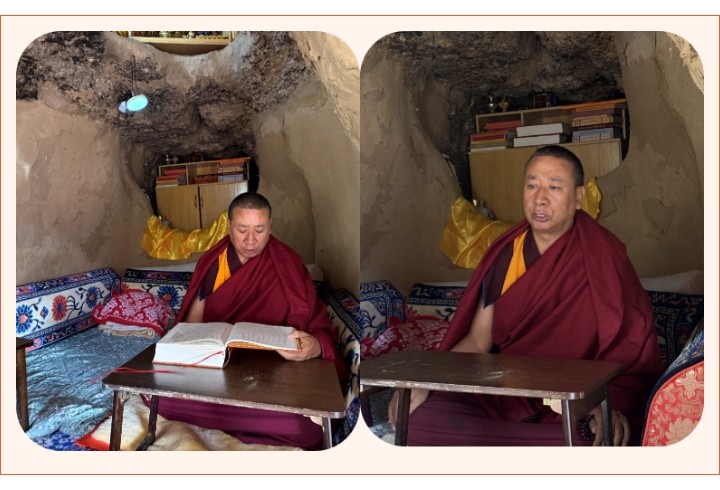
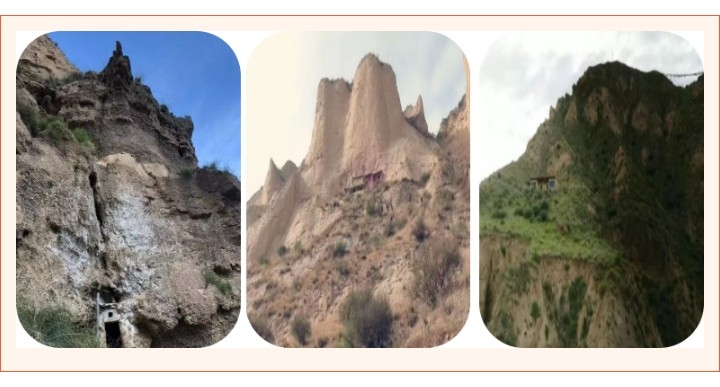
学修期间,阿旺上师以超出常人的智慧,提前学完五部大论、五大金刚的生圆二次第等显密课程,1989年毕业于青海佛学院,1993年毕业于青海塔尔寺辩经院。跟随拉茂雍增大法王十年期间,圆满得到显密一切法门,并相继在圣地堪珠玛山洞、扎东山洞、瞻贡闭关房等地严格闭关修行多年。精进实修大威德金刚、密集金刚、大轮金刚手、空行佛母、马头明王、白文殊、观音、作明佛母、不灭金刚佛母、度母、吉祥天母、狮面空行母等本尊及护法法门。形成“戒律清净、显密圆融、三士道与中观密续兼通”的学术特色。其佛学体系扎根古印度那烂陀传统,融合宗喀巴大师道次第思想,体现出“闻思修并重、显密融通、知行合一”的鲜明特征,使其成为当代少数真正实现“显密通贯”的佛学大家。
Diligent Study and Practice of Exoteric-Esoteric Integration
Displaying extraordinary wisdom, Guru Awang completed the five major treatises and the generation and completion stages of the five principal tantric deities ahead of schedule. He graduated from Qinghai Buddhist College in 1989 and from Kumbum Monastery's Debate College in 1993. During his decade with Lhamo Yongzin Mahāguru, he mastered all sūtric and tantric teachings. He undertook intensive solitary retreat for many years in sacred sites including Khandro Drupma Cave, Dzato Cave, and Zhangong retreat hermitage, practicing Yamāntaka, Guhyasamāja, Cakrasaṃvara, Vajrayoginī, Hayagrīva, White Mañjuśrī, Avalokiteśvara, Kurukullā, Pañcavāraṇa, Tārā, Śrīdevī, and Siṃhamukhā. His academic signature—rooted in the ancient Nālandā tradition and integrated with Tsongkhapa's Lamrim philosophy—embodies "harmonized study of sūtra and tantra, combined practice of precept observance and meditative realization." This makes him one of the rare contemporary masters to genuinely achieve "unified mastery of sūtra and tantra."
显密通贯的闭关修行
Sūtra and Tantra Unification Retreat Practice
革故鼎新的制度创新
1993年受拉茂雍增大法王的嘱托,前往陀乐寺当老师。1994年担任陀乐寺大法台堪布至今,在寺庙管理上推动三大管理创新:
Institutional Innovation through Discarding the Old and Establishing the New
In 1993, at the behest of Lhamo Yongzin Mahāguru, Guru Awang became a teacher at Tuole Monastery, assuming the abbacy in 1994. He pioneered three major innovations:
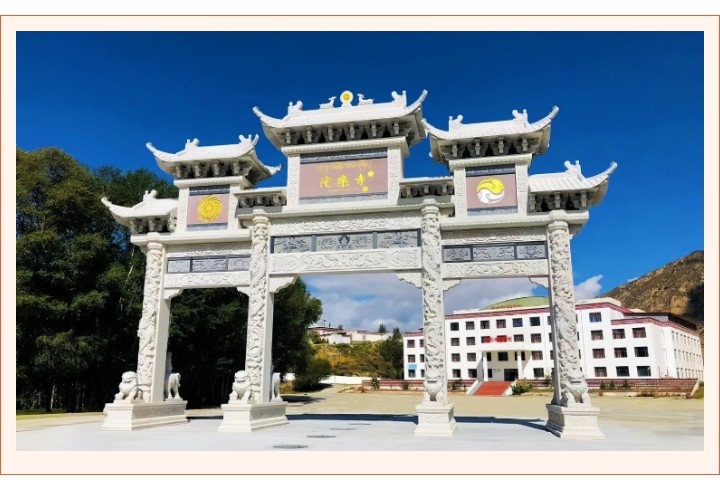
庄严华美的陀乐山门
The solemn and gorgeous Tuole Monastery entry gate
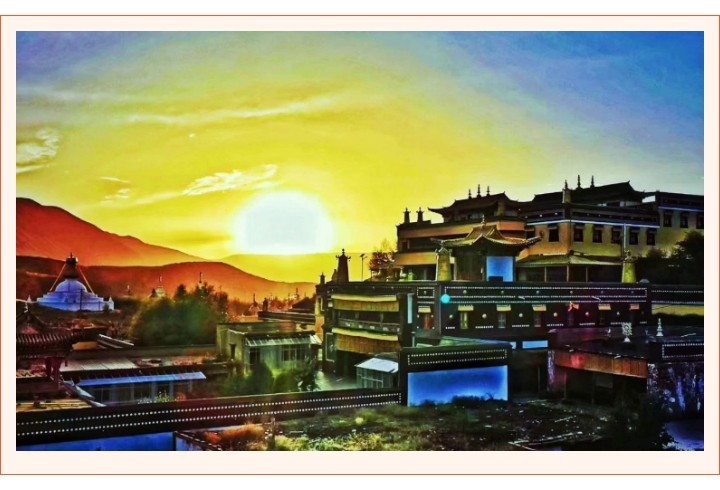
金碧辉煌的大雄宝殿
The magnificent Tuole Monastery
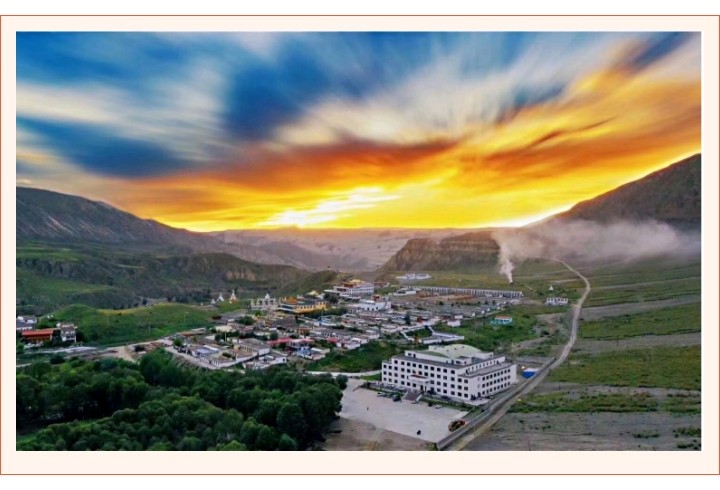
莲台之上的百年陀乐
Tuole Monastery on a hundred years Lotus Platform
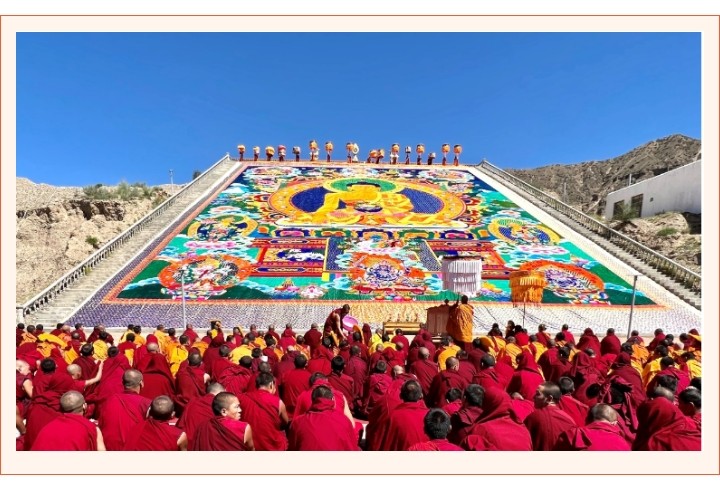
一年一度的瞻佛盛典
The annual Buddha Viewing Ceremony
1、重构管理体系:建立“三会四院一保障”管理机制(民管会、寺管会、僧侣委员会;辩经院、密宗院、诵经院、尊胜院;后勤保障系统),实现从传统“以教治教”向现代“依法立教”的转变。
1.Reconstructed Governance: Established the "Three Committees, Four Colleges, One Support System" (Administrative Committee, Monastery Management Committee, Sangha Council; Debate College, Tantric College, Recitation College, Vijaya College; Logistics Support System), transitioning from traditional "governance by teaching" to modern "teaching founded on rules and law."
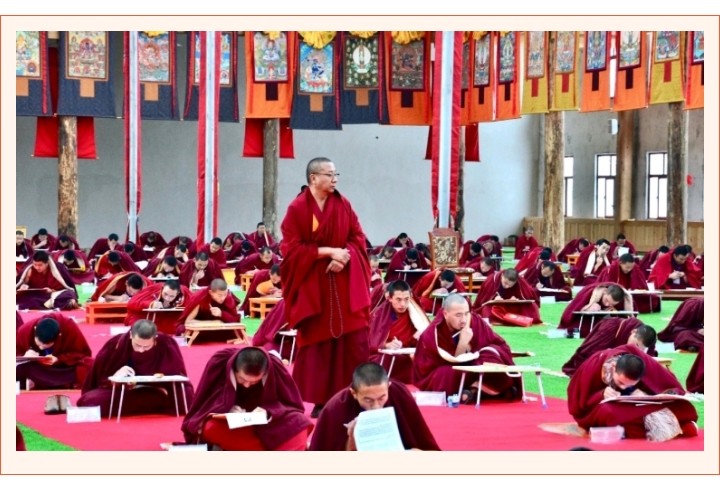
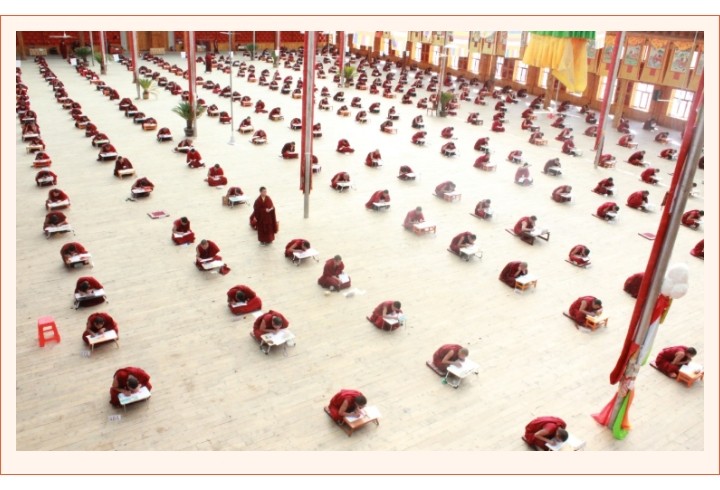
系统严谨的年度考试
systematic and rigorous annual examinations
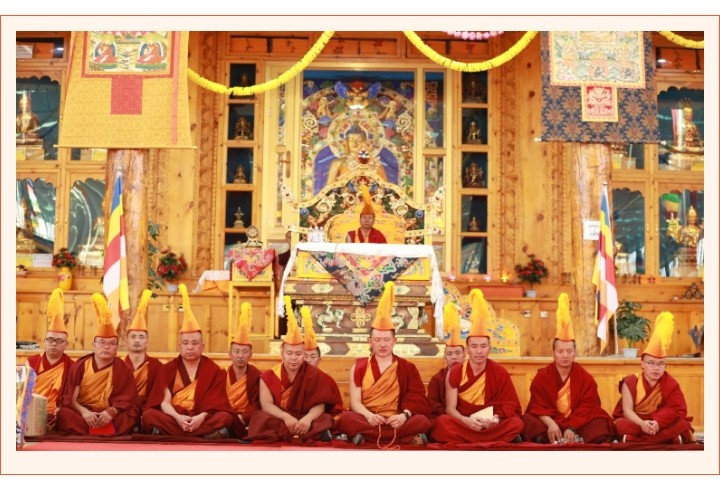
精进学修的人天师表
diligent learning and cultivation model
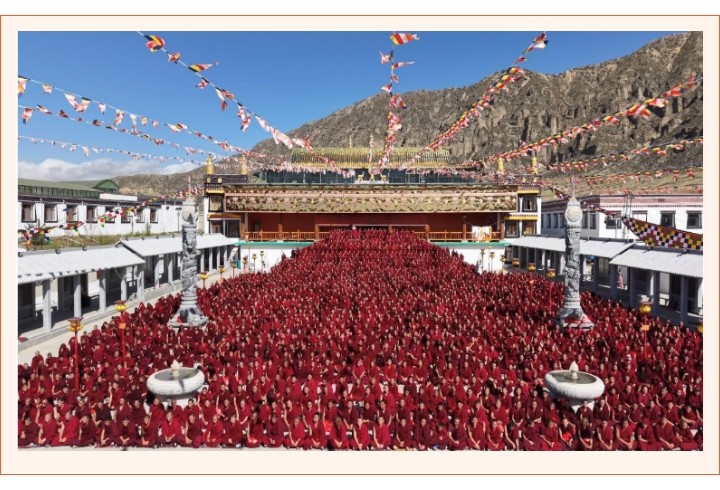
僧才辈出的活水源头
original source of Buddha talents
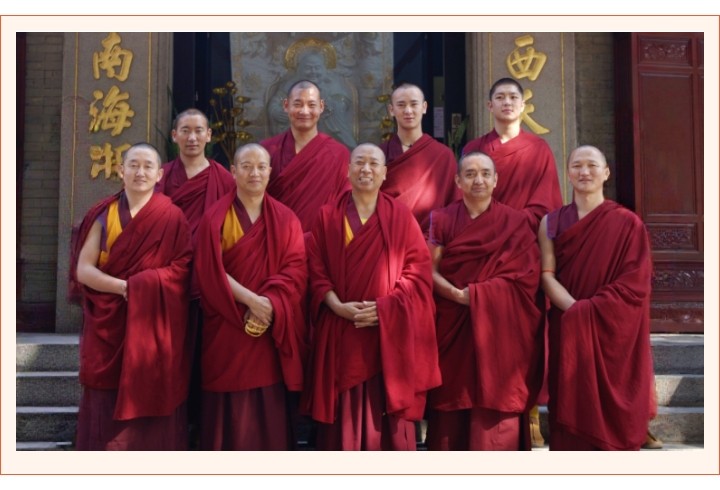
弘法利生的微笑使者
Dharma and Happy Life Promoters & Messengers
2、整合学修系统:创造性整合嘉木样协巴果茫体系、宗喀巴五部大论体系及古印度大成就者理论,建立藏区独有的“三系合一”学修系统。
2. Integrated Curriculum: Synthesized the Jamyang Zhepa Gotsang system, Tsongkhapa's Five Great Treatises, and ancient Indian mahāsiddha theories into a unique "Three-System Unity" framework.
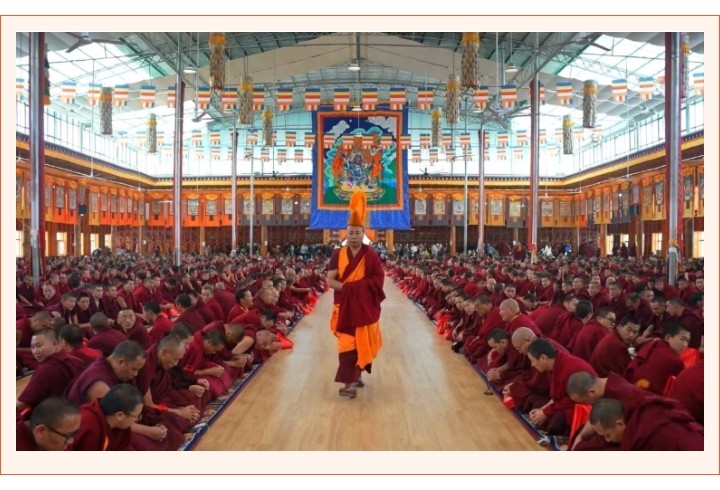
气定神闲的析微察异
Calm and leisurely analyze the differences
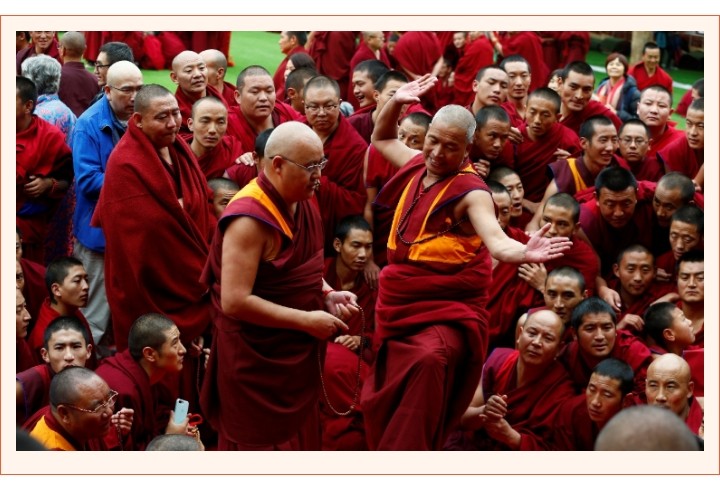
思辨缜密的深厚学养
thoughtful and meticulous profound learning
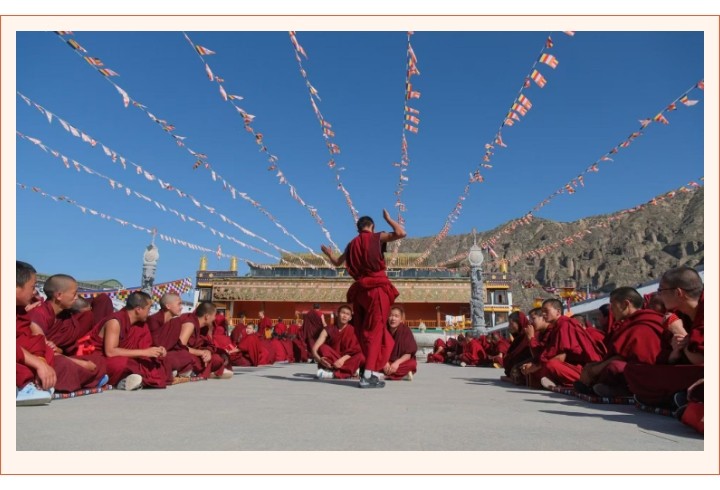
磨砺智慧的因明辩经
wisdom sharpening scriptures debate
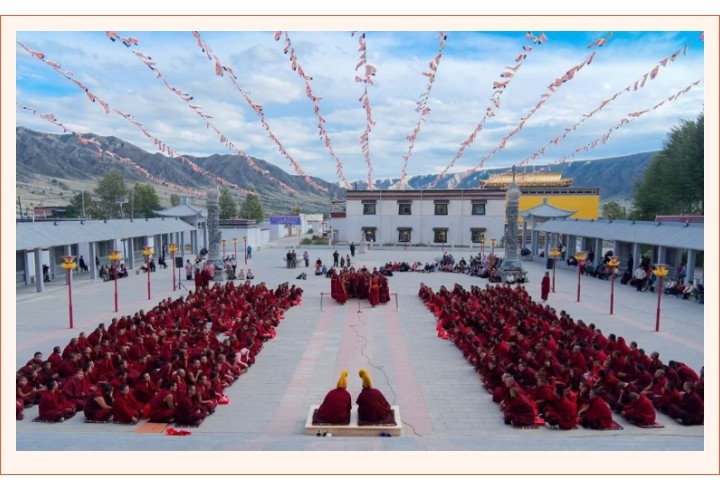
默契配合的立宗论辩
Tacit cooperation on the tenet debate
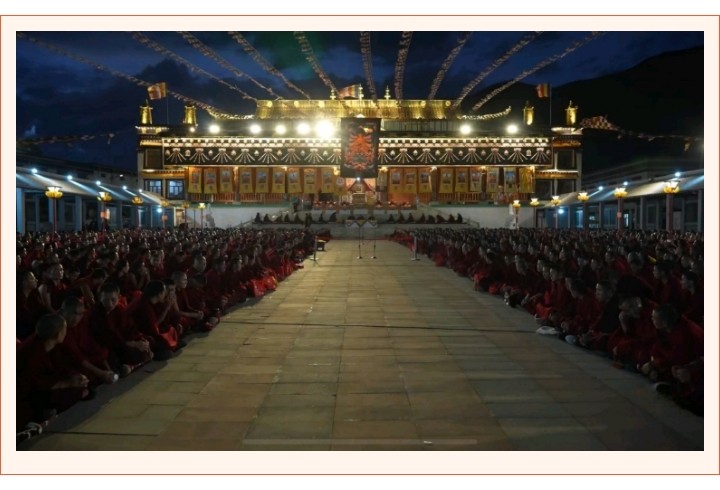
破除无明的思想夜辩
remove the night debate
3、创新民主机制:由经师、格西、老僧、授课教师等三十多人组成的僧侣委员会,根据形势变化和时代特征修订完善寺庙教义教规、内部管理制度,并加强日常监督和执行,特别是对寺庙的重大事项进行民主决策,打破了寺庙教义教规一成不变的传统,开创藏传佛教寺院管理制度化先河,使百年古刹焕发现代管理活力。
3. Innovative Democratic Mechanism: Created a Sangha Council of over thirty khenpos, geshes, senior monks, and teachers to democratically revise doctrines, regulations, and management systems according to contemporary needs, breaking with static tradition and establishing a precedent for institutionalized monastery management.
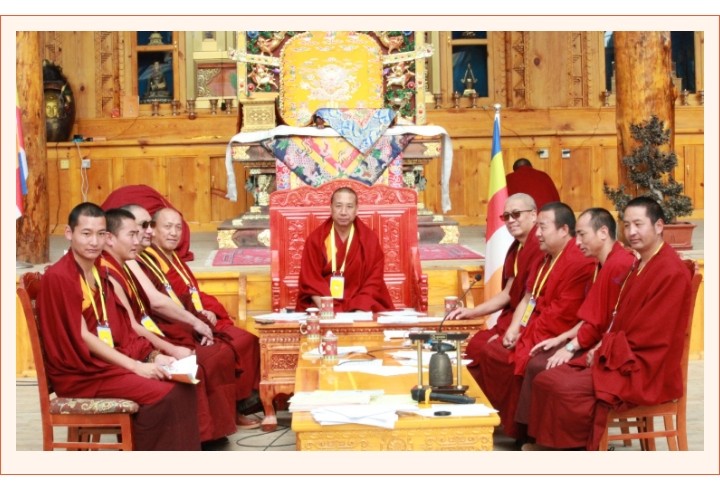
焕发活力的民主决策
Rejuvenating democratic decision-making
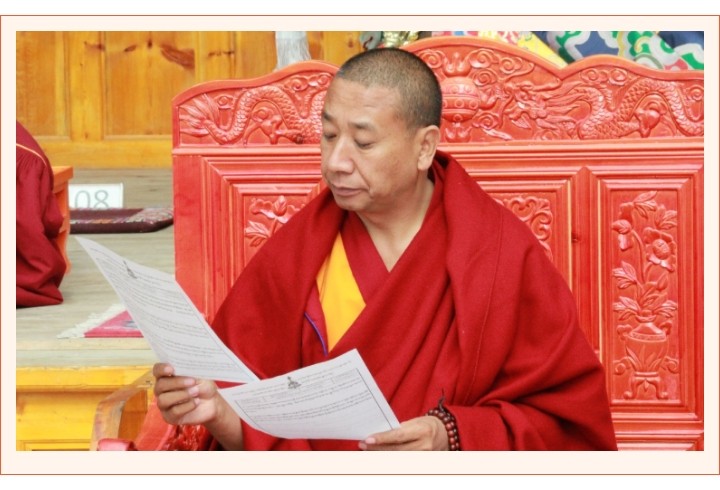
明察秋毫的严谨治学
Rigorous study with clear observation
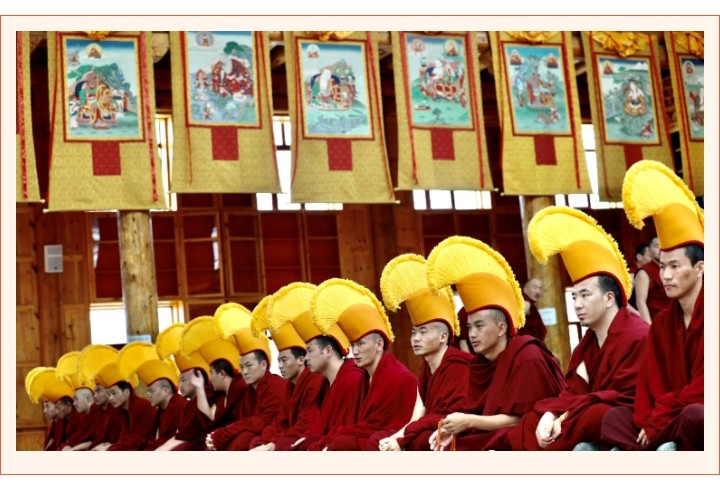
开放包容的学修平台
an open and inclusive learning platform
独树一帜的学修模式
Pioneering Sangha Education
多元一体的学修平台
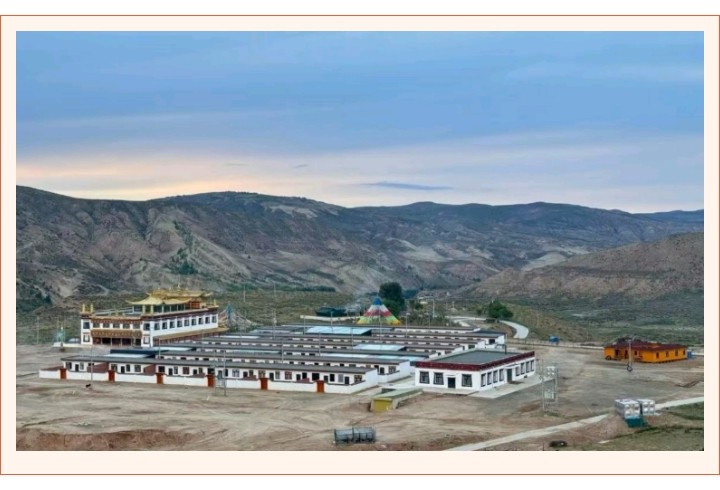
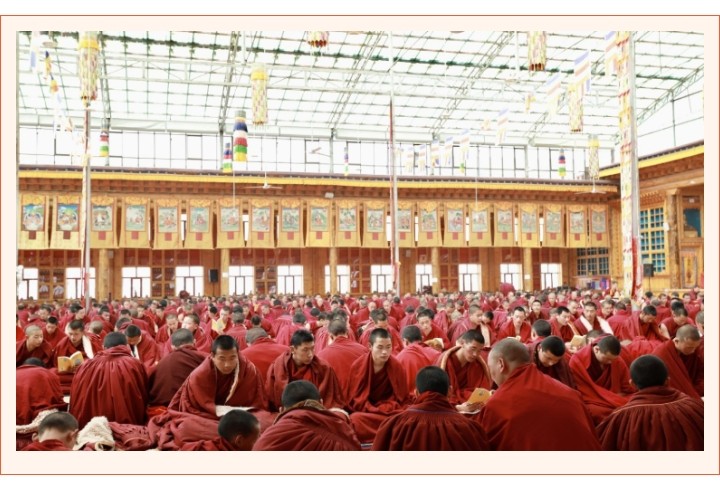
阿旺上师非常注重僧才培养,明确提出“以学修为核心,以学僧为根本”的办寺主张。1995年主持成立了陀乐寺辩经院,2004开始相继建成大雄宝殿、护法殿、尊胜楼、辩经院等。同时,2012年重建青海省尖扎县阿哇寺,2014年建成了阿哇寺大雄宝殿。2014年在贵南县建立了以闻思为主的女众寺院母华阿尼寺。为了让学僧们安心学修,他打破了藏传佛教僧众各自用餐的传统习惯,从2009年开始,学僧用餐、住宿及学修全部免费,2020年建成的膳食大堂可同时容纳2000僧人集体用餐,为藏区历史首创。并在学僧中创造性地推行年度考试制度,涵盖辩经、背诵、笔试及十明文化,该模式已被藏传佛教宁玛派、噶举派、萨迦派、觉囊派、格鲁派多座寺院采纳。
在阿旺上师的引领下,先进的教育理念、系统的学习制度和开放的学习平台大大激发了学僧的学修热情,学僧们严守佛教戒律,注重学修并重,闻思修、讲辩著等方面日益精进,深厚严谨的学风在藏区名闻遐迩。截至2025年,已培养般若然杰巴(佛学硕士)200多人,噶居格西(佛学博士)50余人,学员来自藏传佛教300多座寺院,形成“多元一体”的学僧养成模式。
Diverse and Integrated Learning and Practice Platform
Guru Awang champions "spiritual practice at the core, learning to be a monk as the foundation." He founded Tuole Monastery's Debate College in 1995 and oversaw construction of major temples and academic halls from 2004 onward. In 2012, he restored Awa Monastery in Jianzha County; in 2014, he completed its main temple and established Muhua Nunnery in Guinan County as a study-centered female monastic institution. Breaking tradition, he instituted free food, lodging, and education for all monastics beginning in 2009. The 2020 completion of a dining hall accommodating 2,000 monks simultaneously marked an unprecedented achievement in Tibetan Buddhist history. His innovative annual examination system—encompassing debate, memorization, written tests, and the ten fields of knowledge—has been adopted by multiple monasteries across Nyingma, Kagyü, Sakya, Jonang, and Gelug schools.
By 2025, his disciples include over 200 *Prajñāraṇjita* (Buddhist Masters) and more than 50 *Kachu Geshes* (Buddhist Doctors) from over 300 monasteries, forming a "pluralistic yet integrated" training model renowned throughout Tibetan regions.
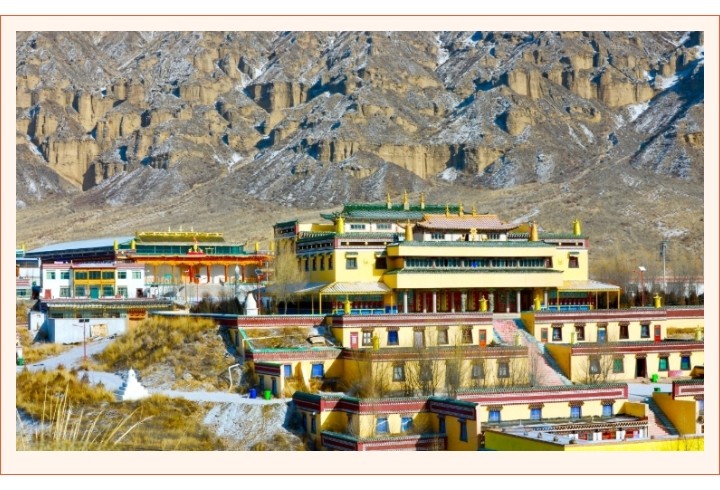
气势恢宏的学修殿堂
A magnificent hall of learning
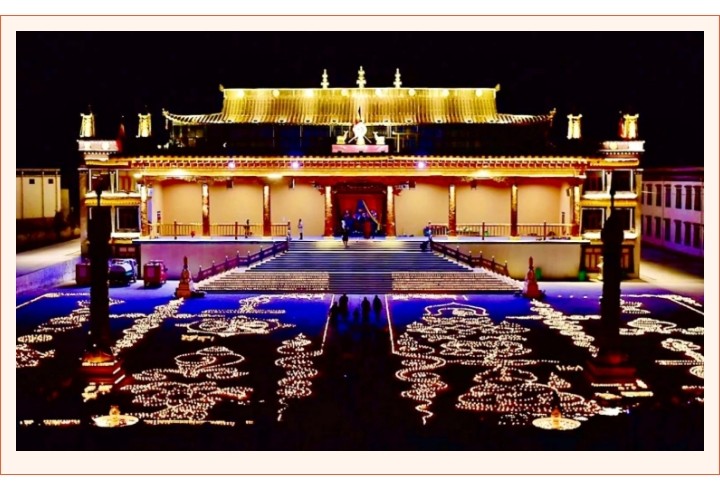
燃灯节的辩经院广场
Scriptures Debate Institute Square - Lantern Festival
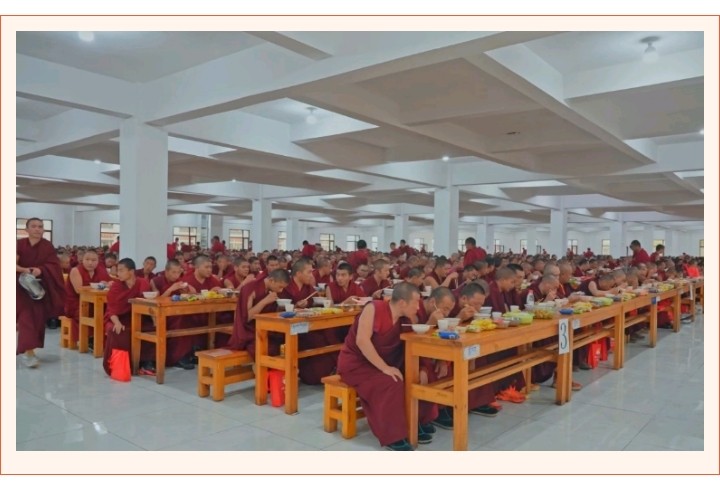
井然有序的千僧食堂
an orderly canteen for thousand monks
闻思清净的母华阿尼寺
Muhuaani Temple
利他和合的潜心深造
altruism and harmony further study
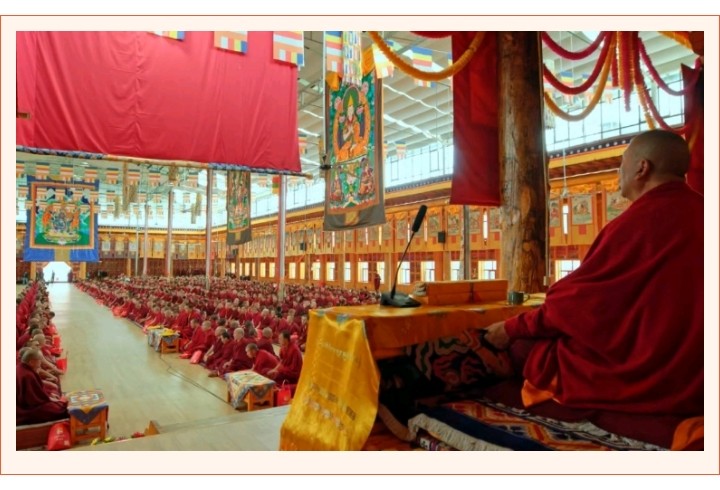
学僧为本的鸿业远图
The long-term vision of the monk-oriented studies & practice
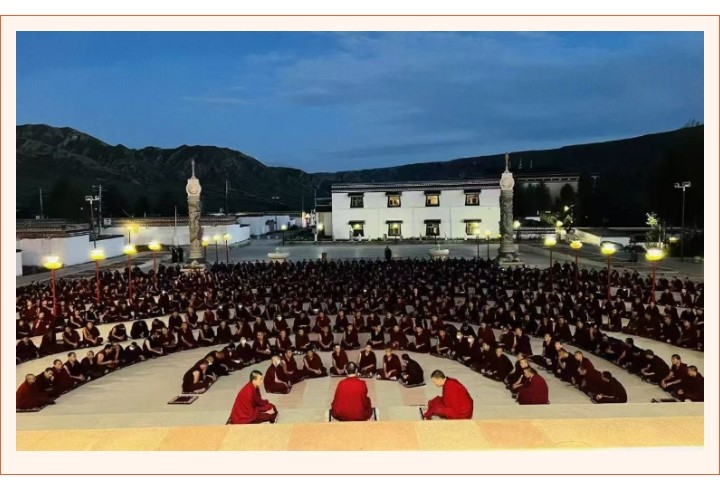
后继有人的僧团精英
The elites of the sangha
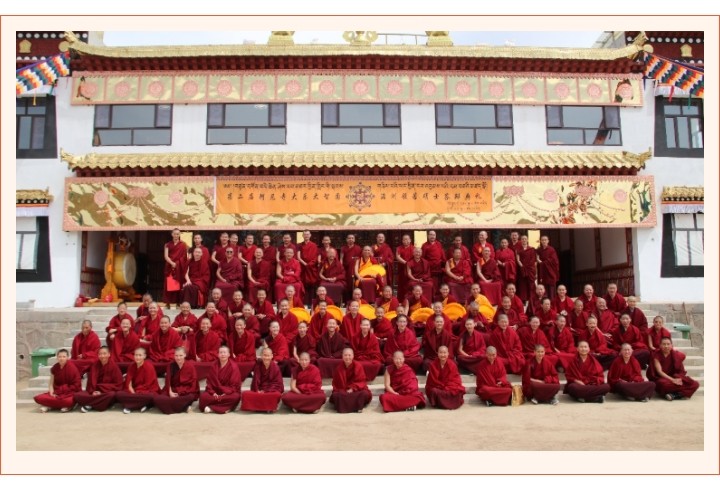
学有所成的答辩典礼
ceremony after successful defense
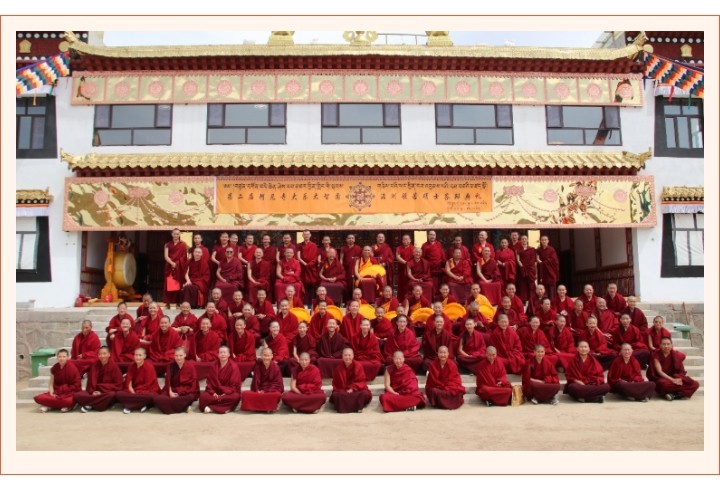
儒雅学养的僧尼硕士
Master Degree Monks
学术成就与著作
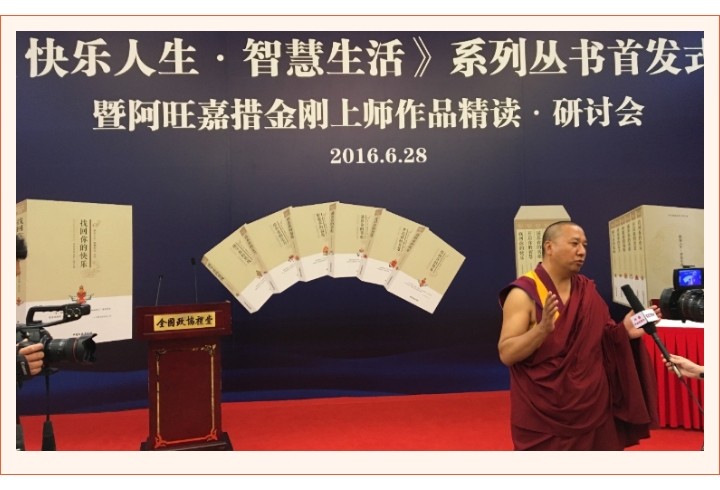
阿旺上师精通藏、汉语言学,在藏传佛教因明学、藏传佛教哲学与伦理学研究、藏族历史文献、密宗风水等学术领域及五明十学等诸多学科研究、文化保护传承等方面卓有成就。至今已编撰完成各类佛学著作二十二本,其中汉语版十本、藏语版十二本。他在前辈祖师的基础上,将三士道进行了更系统全面地整理,汉文版《法海宝藏》系列论著通俗易懂,包含了《三士道》《心经注解》《缘起赞注解》《金刚经注解》等,开创性地系统整理了菩提道次第体系,藏文版《般若经注解》《密宗四部仪轨》系列丛书被公认具有里程碑意义,代表著作还包括《快乐人生·智慧生活》系列丛书及《智慧语录》《三士道三派上师口授》《闭关实修法》《密宗风水》《甘露法雨》及藏文版《宗喀巴大师传记》《密续二次第纲要》《常诵经文注解(含缘起赞、菩提道次第摄颂、三主要道注解)》等。他的著作得到国内外佛学界众多大德赞许和推崇,被藏地信众尊称为“显密佛法大宝库”。其著作从藏语翻译为汉语、韩国语等文字,为推动宗教间对话,亚洲各国佛教界同根同源的友好往来做出了卓越的贡献。
Academic Achievements and Publications
Fluent in Tibetan and Chinese, Guru Awang excels in Buddhist pramāṇa, philosophy, ethics, Tibetan historical literature, and tantric geomancy. He has authored twenty-two works—ten in Chinese and twelve in Tibetan. His Chinese *Dharma Ocean Treasures* series, including *Three Levels of Motivation*, *Heart Sūtra Commentary*, *Praise of Dependent Origination Commentary*, and *Diamond Sūtra Commentary*, systematically presents the Lamrim tradition with unprecedented clarity. His Tibetan commentaries on the *Prajñāpāramitā* and *Four Classes of Tantra Rituals* are recognized as landmark achievements. Other works include the *Happy Life·Wisdom Living* series, *Wisdom Aphorisms*, *Three Lineage Oral Instructions on Lamrim*, *Retreat Practice Manual*, *Vajra Geomancy*, *Nectar Dharma Rain*, and Tibetan editions of *Tsongkhapa's Biography* and *Tantric Two-Stage Essentials*. Hailed as a "Great Treasury of Sūtra and Tantra," his works have been translated into Chinese, Korean, and other languages, fostering interreligious dialogue and Buddhist fellowship across Asia.
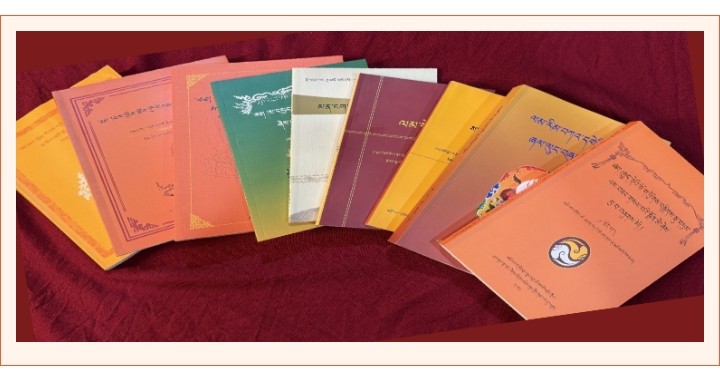
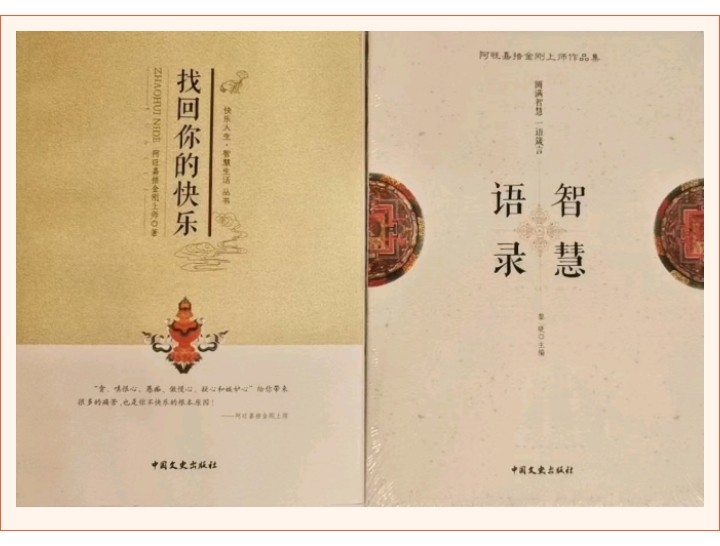
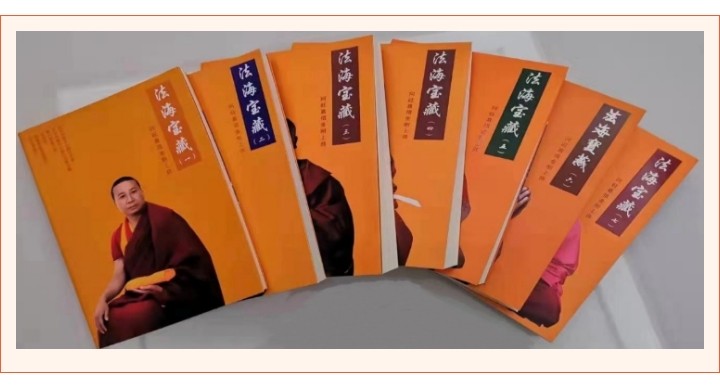
著作等身的显密巨著
Prolific Magnum Opus in Exoteric and Esoteric Buddhism
对外活动与国际交流
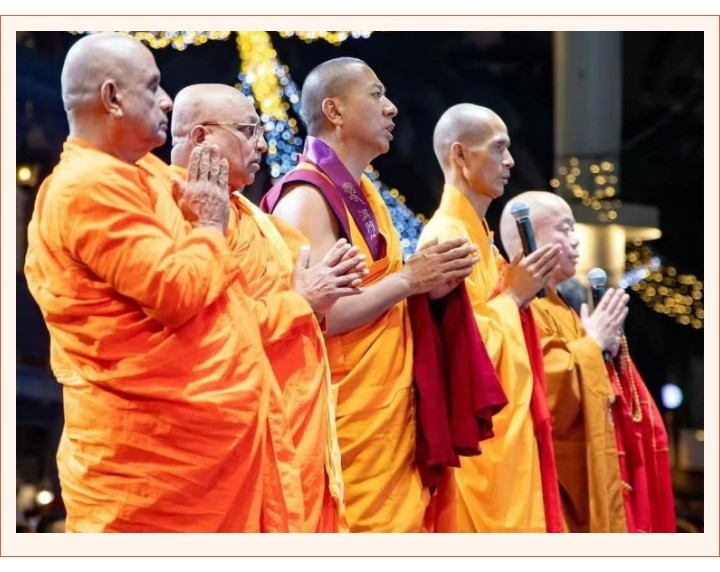
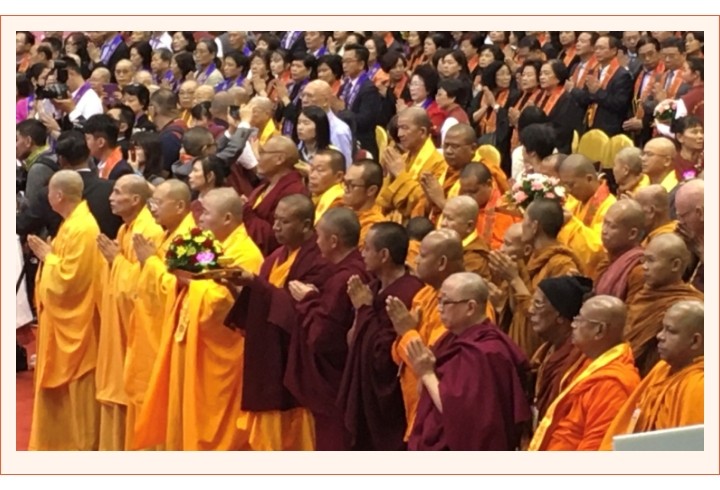
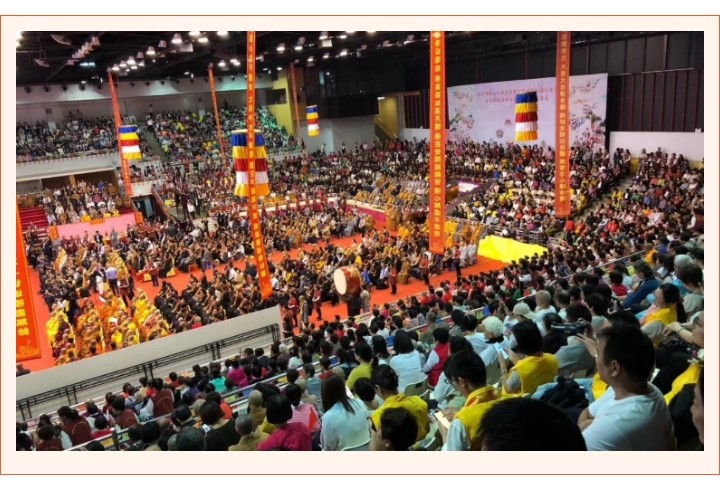
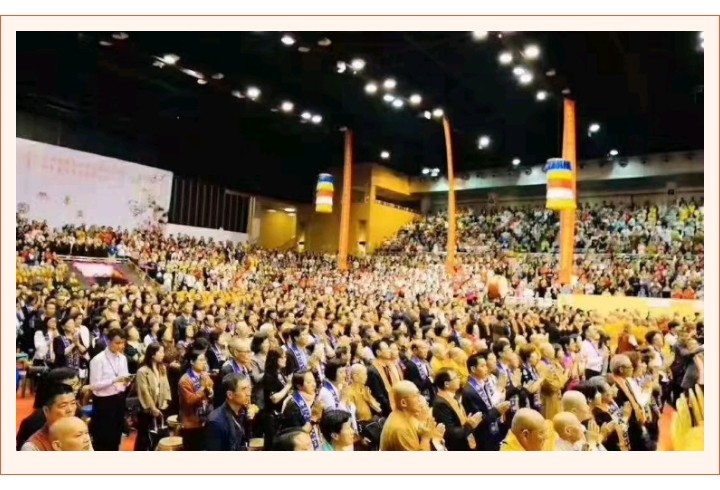
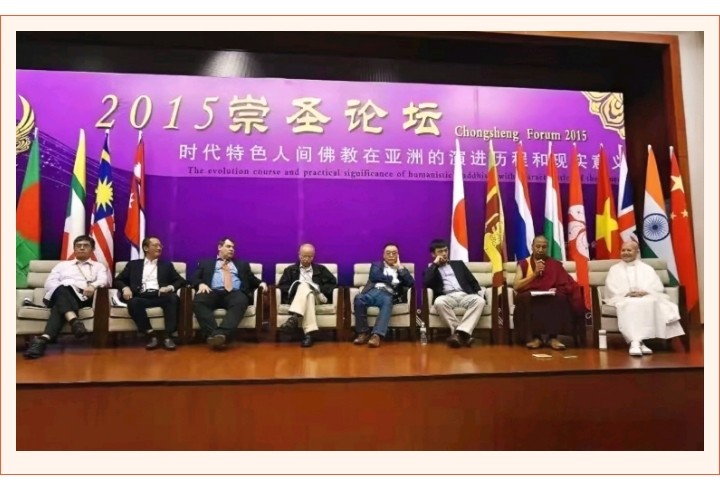
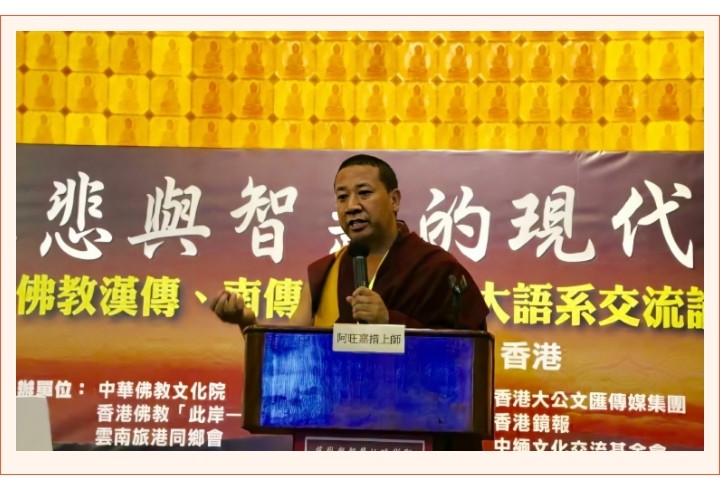
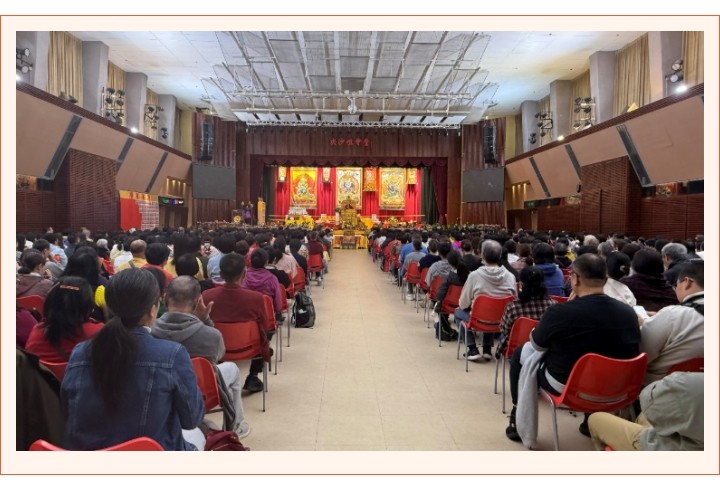
阿旺上师还与华东师范大学、西藏民族大学等共建学术研究平台,推动佛学研究的现代转型。同时,经常受邀参加省内外各类学术交流,2009年至2024年,受澳门佛教总会邀请,率领陀乐寺僧团代表藏传佛教界连续参加庆祝澳门回归十周年、十五周年、二十周年、二十五周年祈福法会并主法;同时,受邀参加中缅学术交流、韩国讲经传法佛学交流、比利时鲁汶大学文化论坛、台湾南华大学佛学论坛、崇圣(国际)论坛、香港佛教(国际)论坛等,并作大会主题发言。阿旺上师在对外交流中,强调宗教间的融通,并旗帜鲜明地提出和谐、共生、互鉴、普世的宗教主张,促进了多民族、多教派的交流交融。其推动建立的陀乐寺现代管理模式,被称为“寺院管理的现代转型典范”,产生了广泛的国际影响。
Foreign Activities and International Exchanges
Guru Awang collaborates with East China Normal University, Tibet Minzu University, and other institutions to advance modern Buddhist scholarship. From 2009 to 2024, he led Tuole Monastery's sangha in successive celebrations for Macau's 10th, 15th, 20th, and 25th reunification anniversaries at the invitation of the Macau Buddhist Association. He has delivered keynote addresses at China-Myanmar academic exchanges, Korean Dharma propagation events, KU Leuven's cultural forum, Nanhua University (Taiwan) Buddhist symposiums, the Chong Sheng International Forum, and the Hong Kong Buddhist (International) Forum. Advocating harmony, coexistence, mutual learning, and universal values, his "modern management model" for Tuole Monastery has become an international exemplar of "monastic institutional transformation."
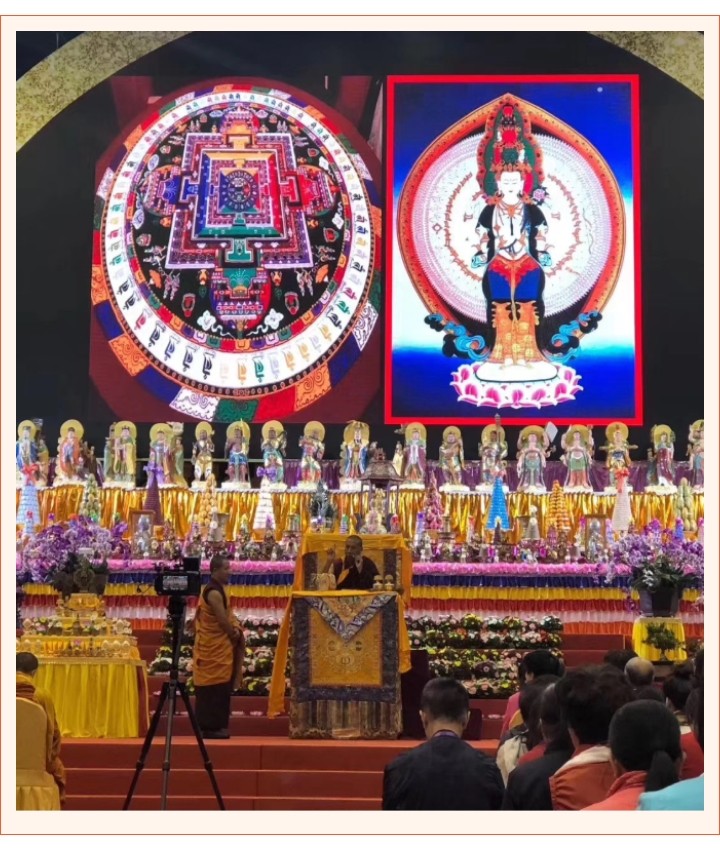
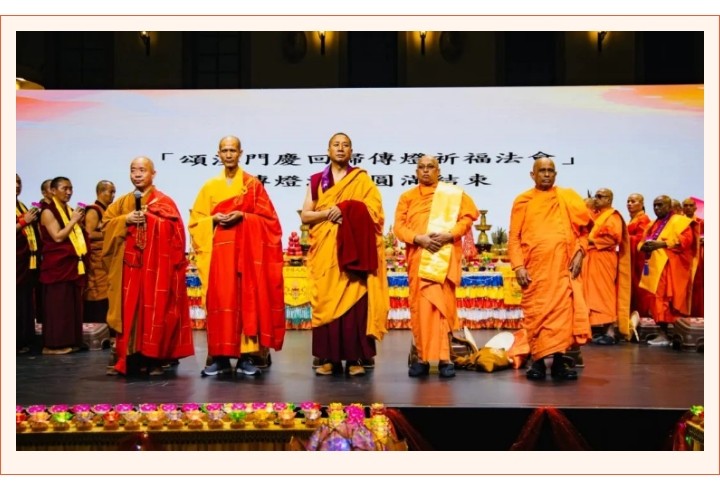
利乐有情的海外弘法
Overseas Dharma Activities
承前启后的佛学实践
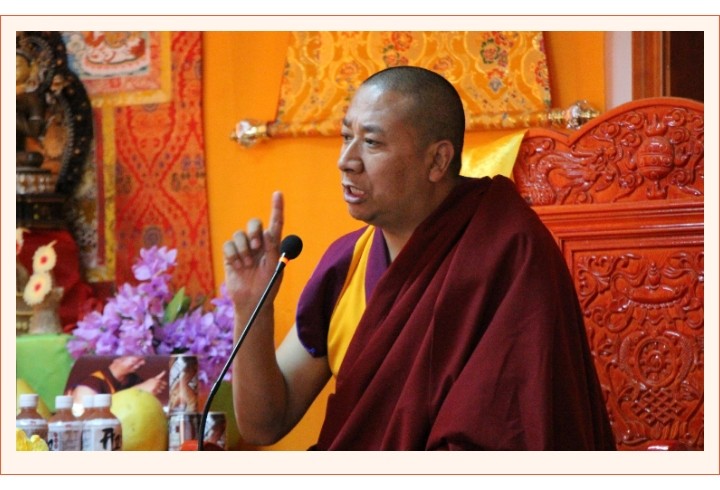
阿旺上师以自身的修行实践,既保持了法脉传承的正统性,又开创了佛教现代化的新路径,在藏传佛教发展史上书写了承前启后的重要篇章。其“以现代精神承续佛学慧命”的实践,对于全球化时代的宗教发展具有重要启示。
Buddhist Practice that Builds on the Past and Paves the Way for the Future
Guru Awang's personal practice preserves the orthodoxy of his lineage while pioneering a modernized Buddhist path, writing a vital connecting chapter in Tibetan Buddhist history. His work of "continuing the Buddha's wisdom with modern spirit" offers profound inspiration for religious development in the global era.
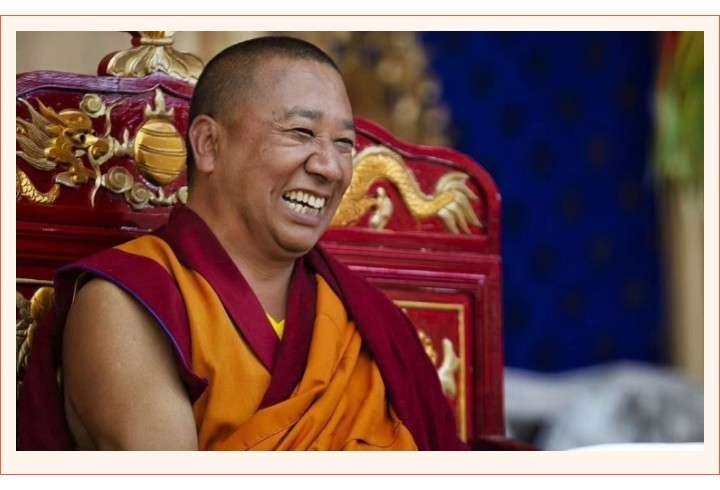
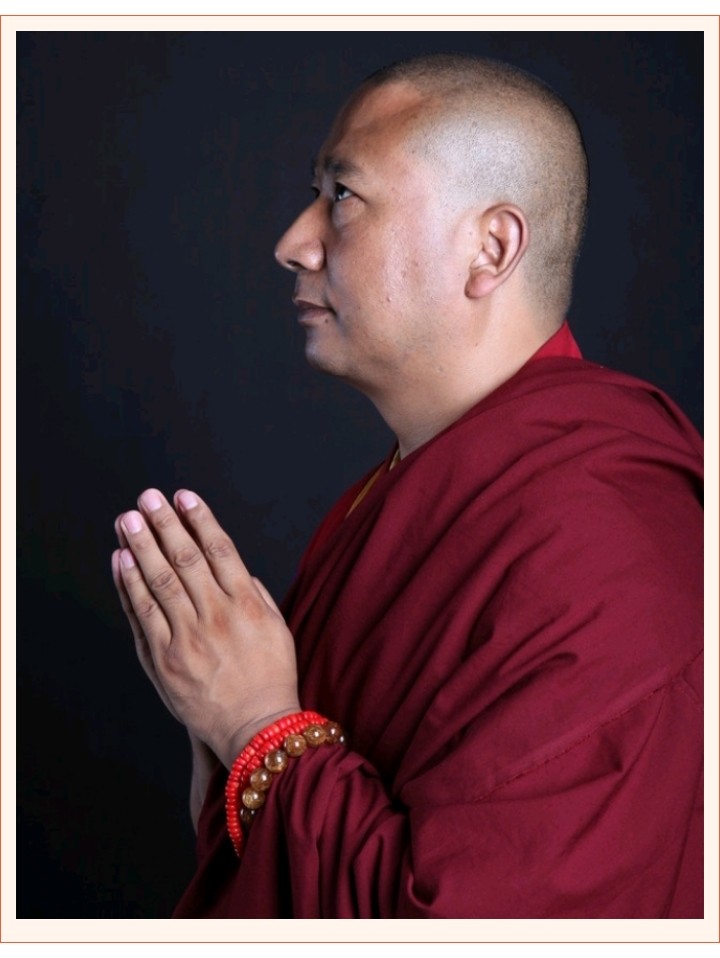
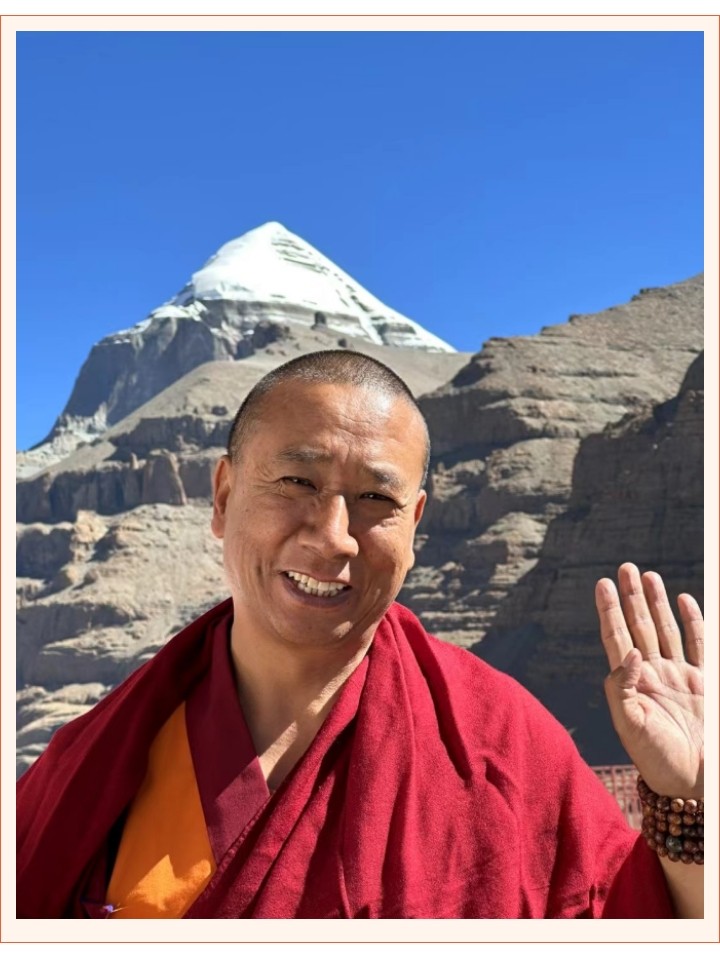
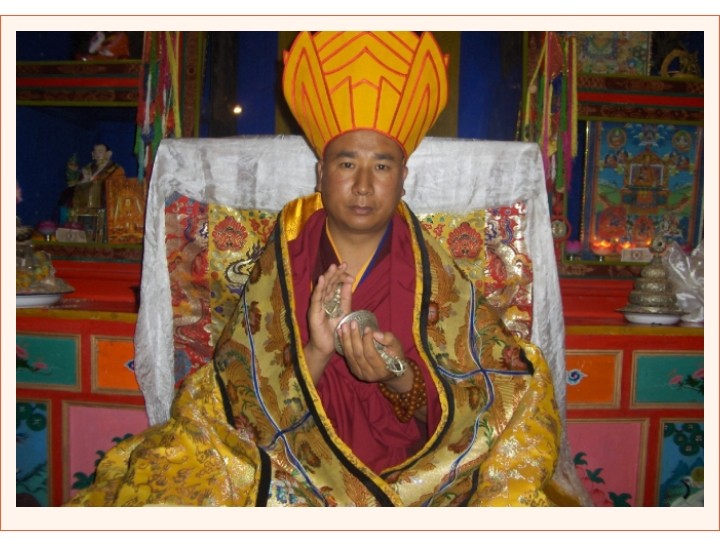
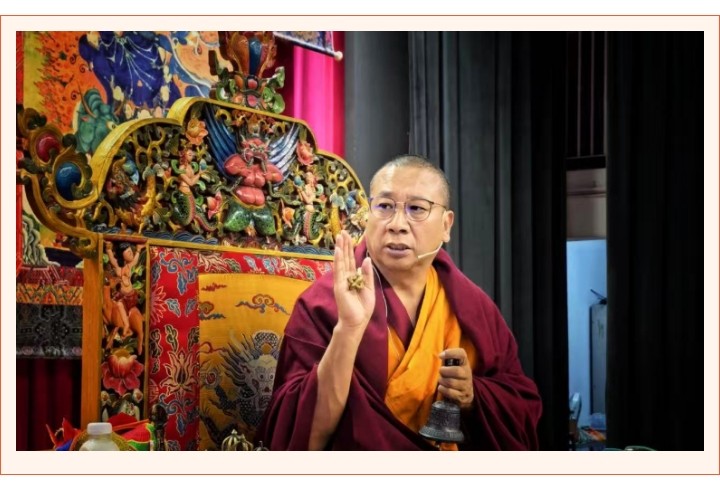
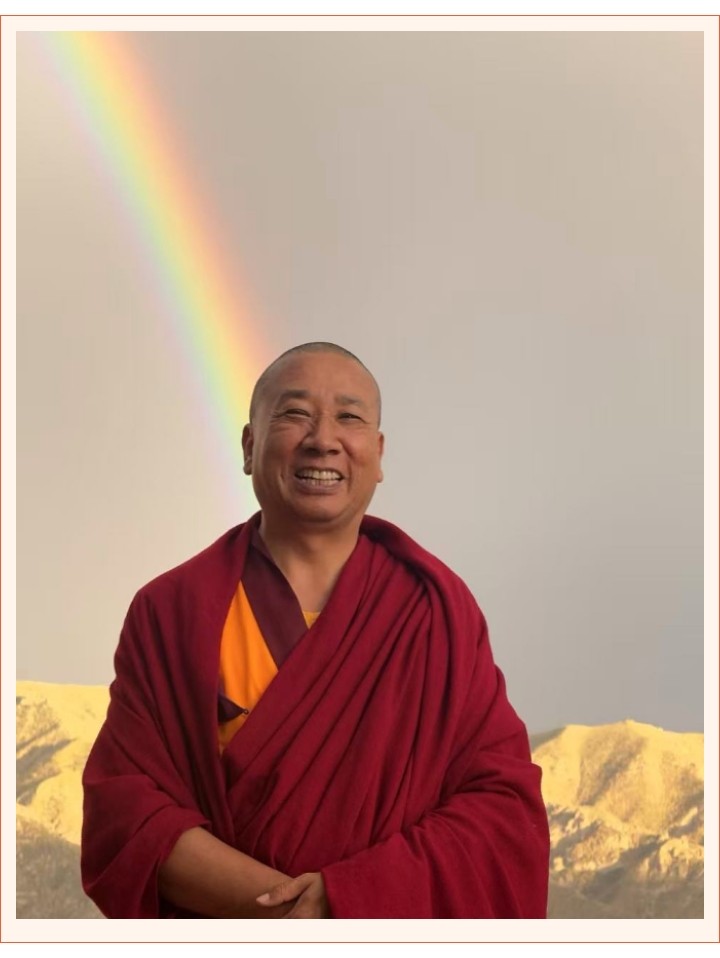
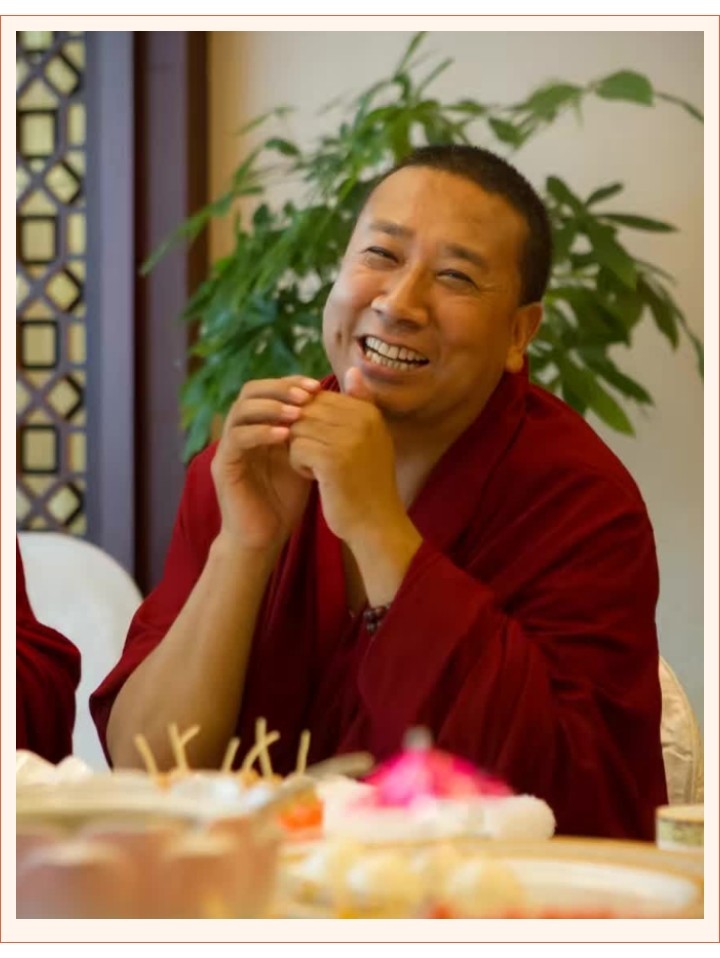
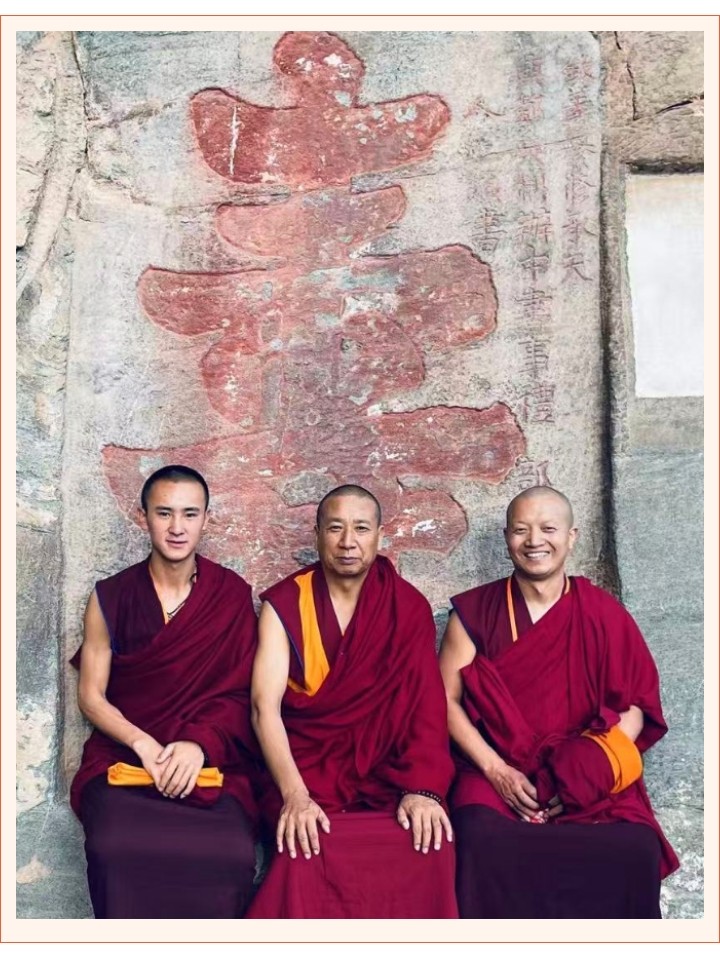
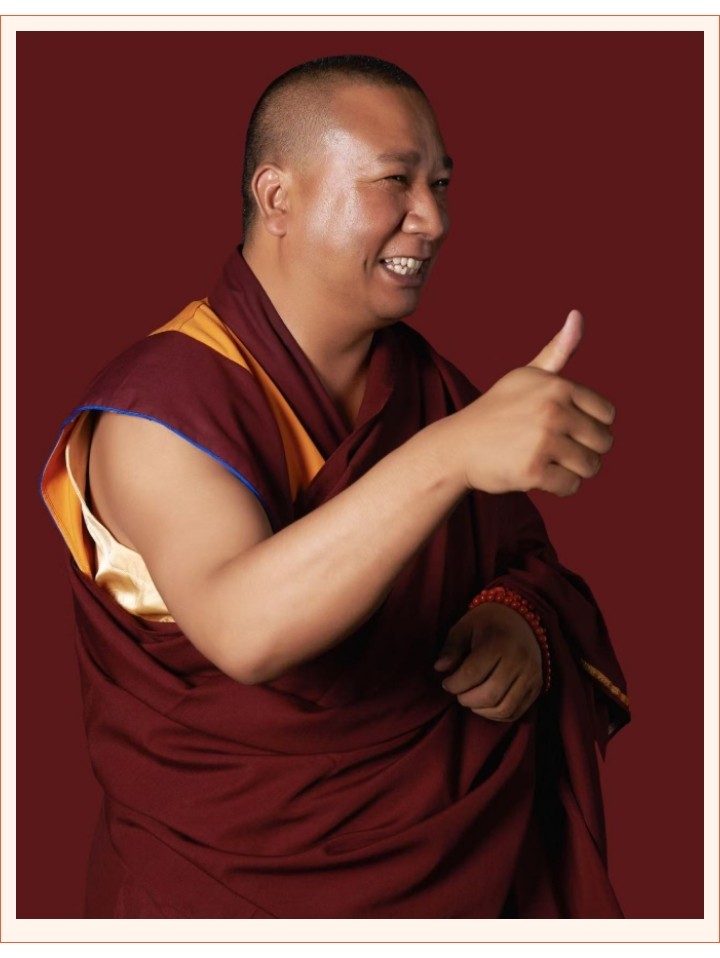
弘法利生的大爱无疆
Unbounded Love
through Propagating Buddhism and Liberating All Beings


